


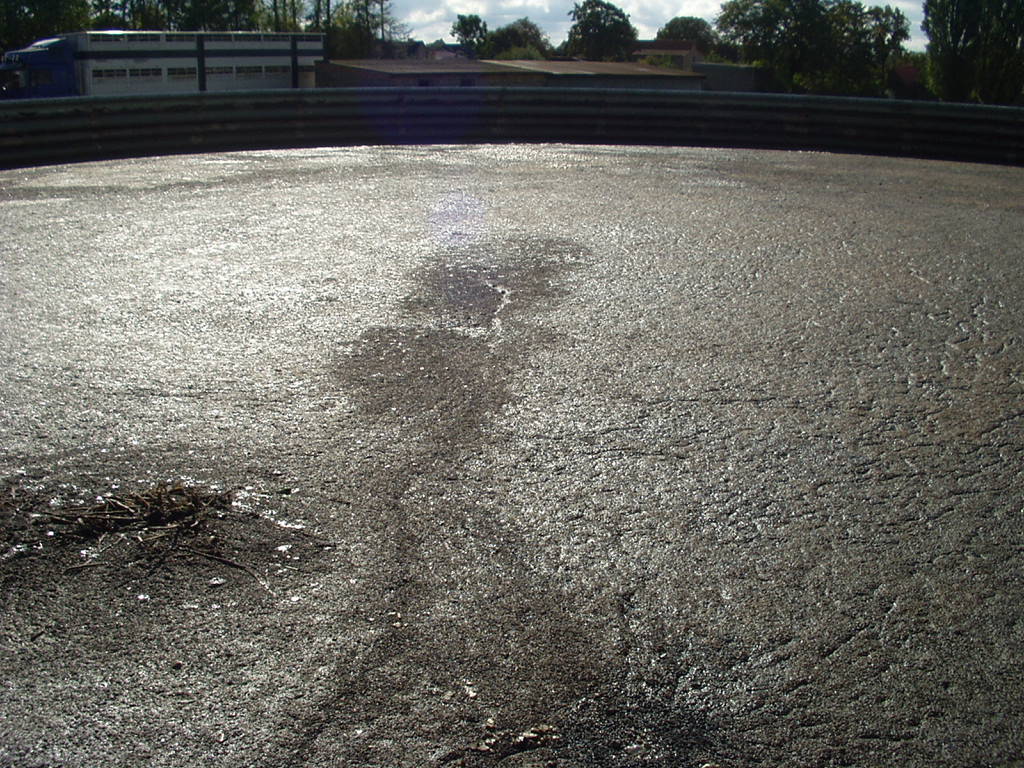
In practice, however, the quality of liquid manure is not always uniform. Floating and sediment layers, unpleasant odours, poor flowability or varying nutrient concentrations can make storage and spreading harder. Holistic liquid manure treatment therefore does not start just before the slurry tanker. It looks at the whole path – from the barn via the store to the soil.
In this article you will learn what is meant by liquid manure treatment, which factors influence liquid manure quality and which measures farms can use to make their organic fertiliser easier to use.
In brief: what does preparing liquid manure mean?
Preparing liquid manure means specifically improving its properties for storage, pumping, spreading and use in crop production. In everyday farming this often means keeping the liquid manure as homogeneous and free-flowing as possible, reducing floating and sediment layers, limiting odour nuisance and spreading the nutrients it contains evenly across the field.
This is to be distinguished from technical processes for separation or full treatment, in which liquid manure is, for example, separated into solid and liquid components or processed further. Which form of treatment makes sense depends on animal species, manure volume, storage technology, available land and the farm’s goals.
Liquid manure contains, among other things, nitrogen, phosphate, potassium, magnesium, trace nutrients and organic matter. Its exact composition can, however, vary considerably. Influences include animal species, feeding, water content, bedding, feed residues and the type and duration of storage.
Why is good liquid manure quality important for the farm?
Uniform liquid manure quality does not only make stirring, pumping and spreading easier. It is also an important prerequisite for the calculated amount of liquid manure being distributed as evenly as possible across the field.
If the liquid manure has separated strongly in the store, individual tanker loads can contain different shares of water, solids and nutrients. This makes it harder to spread the planned amount of nutrients precisely.
Well-homogenised liquid manure can offer several advantages:
Before spreading, liquid manure should therefore be sufficiently homogenised. The Federal Information Centre for Agriculture (BZL) also points out that liquid manure is stirred before the tanker is filled, so that a mass that is as homogeneous as possible can be spread evenly.
The most important influencing factors along the liquid manure chain
Issues with liquid manure rarely arise at just one point. They often develop along the entire process chain. Anyone who wants to treat liquid manure holistically should therefore start in the barn.
Feeding and animal husbandry
The composition of liquid manure is influenced by animal species, ration design, feed conversion and water consumption. Feed residues, bedding and cleaning water can also change the consistency.
Stable feeding and good digestion are therefore an important starting point. The more uniform the excreta and the more controlled foreign matter or unnecessary amounts of water entering the system, the easier the liquid manure is to handle later.
Input into channel and store
Solids can already settle in the manure channel or form hardened layers. Long fibres, straw components and feed residues can impair flowability.
The design of the channels, the position of outlets and the movement of the liquid manure also influence how evenly the material reaches the store. Conspicuous deposits should therefore not be checked only shortly before spreading.
Storing the liquid manure
During storage, biological and chemical conversion processes take place. At the same time, solid components can settle or collect at the surface.
A pronounced floating layer makes stirring from above harder, while solid sediment layers reduce the usable storage volume and can strain pumps or pipes. The longer such layers exist, the greater the technical effort of dissolving them again can become.
Storage also plays a legal role: manure stores are subject to TA Luft requirements. We summarise the current status of deadlines and measures in the article Manure storage and TA Luft .
Homogenisation and stirring technology
The agitator must suit the shape of the tank, the manure volume and the consistency. Motor power alone is not decisive. Position, flow direction, stirring time and fill level also influence the result.
The aim is not to stir for as long as possible, but to produce uniform liquid manure without using unnecessary energy or releasing additional emissions.
Stirring and moving liquid manure can release life-threatening gases. Manure stores and channels must not be entered without suitable safety measures. While stirring, particularly near the barn, ensure sufficient ventilation, distance and compliance with the farm’s safety rules.
Spreading on the field
Good treatment only develops its full benefit if spreading also suits the crop, the soil and the weather.
Low-emission spreading technology, a short time until incorporation on bare arable land and suitable weather conditions can help limit ammonia losses. In agriculture, ammonia emissions arise in particular during housing, storage and spreading of nitrogen-containing organic fertilisers. You will find practical trials on barn air and emissions in our pig trials and cattle trials.
The applicable fertiliser law requirements, closed periods, distances, documentation obligations and state-specific rules must be observed regardless of the chosen liquid manure treatment.
Common issues in the manure store
The visible issues in the store are often only symptoms. It is therefore worth not only removing the current layer but also looking for its cause.
Floating layers
Floating layers can arise from fibre-rich components, feed residues, bedding or floating organic matter. Depending on their thickness, they make it harder to monitor the store contents and to stir evenly.
Sediment layers
Heavy solids can settle on the tank floor or in channels. Over time, compacted deposits can form that can only be dissolved with great technical effort.
Unpleasant odours
Liquid manure basically has a typical odour of its own. Particularly intense or unusual odours can, however, point to unfavourable conversion conditions. Odour alone is not a complete quality analysis, but together with consistency, colour, foaming and layer formation it can be an important practical indicator.
Poor flowability
Viscous or strongly separated liquid manure strains pumps, pipes and distributors. Uneven consistency can also mean that the first and last tanker loads are composed differently.
Fluctuating nutrient contents
Nutrient contents differ not only between cattle and pig slurry. Differences can also occur within one store if the liquid manure has not been sufficiently homogenised.
Representative sampling is therefore only sensible after thorough mixing. Laboratory analyses or suitable sensor technology can help to take the actual nutrient contents better into account in fertiliser planning.
Common mistakes in liquid manure treatment
Many difficulties arise from small deviations that build up over months:
Manure management starts in the barn and ends in the soil. Only when all stations work together does liquid manure become an organic fertiliser that is as uniform as possible and can be used in a targeted way.
Practical measures for holistic liquid manure treatment
Document the starting situation
Regularly check odour, flowability, foaming and floating and sediment layers. Note changes and when they occur. Photos can help compare developments over several months.
Check inputs into the liquid manure system
Check which amounts of cleaning water, rainwater, bedding and feed residues enter the system. Not every input can be avoided, but it should be taken into account for storage capacity, stirring technology and spreading planning.
Match stirring and pumping technology
Check whether the position and power of the agitator suit the tank geometry. With recurring dead zones or deposits, a technical adjustment can be more economical than more frequent and longer stirring.
Homogenise liquid manure in good time
Do not wait until massive layers have to be dissolved shortly before spreading. Anticipatory observation and treatment can reduce workload and relieve the equipment.
Know the nutrient contents
Have the liquid manure analysed regularly and ensure representative sampling. Only when the actual values are known can organic and mineral fertilisation be sensibly matched.
Plan low-loss spreading
Match spreading time, technology, amount and weather. The aim is to bring the liquid manure as close as possible to plant demand and to limit avoidable nutrient losses.
Support biological processes in a targeted way
In addition to technical and organisational measures, biological manure additives can be used to support natural conversion processes. BioAktiv offers solutions for this that aim at better homogeneity, less layer formation, improved flowability and less odour nuisance. The choice and dosage should always suit the animal species, manure volume, storage technology and the specific farm situation.
More on this: BioAktiv Professional Liquid Manure, Manure Booster and the manure and compost trials.
Solutions for liquid manure and compostingCheck the results
Do not assess a measure on a single impression. Useful checkpoints are, for example:
- Development of floating and sediment layers
- Required stirring time
- Energy consumption
- Pumpability
- Blockages in pipes or distributors
- Odour development
- Evenness of spreading
- Results of liquid manure and soil analyses
Conclusion: liquid manure treatment is cycle management
Treating liquid manure holistically means looking at more than the contents of the manure tank. Feeding, barn, inputs into the system, storage, stirring technology, nutrient analysis, spreading and effect on the soil belong together.
Anyone who checks these areas regularly and matches them to each other creates better conditions for homogeneous and free-flowing liquid manure, less disruptive use of equipment and more targeted use of the nutrients it contains.
There is no one-size-fits-all solution for every farm. Cattle and pig slurry, different barn systems, storage tanks and spreading techniques each place different demands. What matters is therefore manure management that suits the individual farm situation and checks its results regularly.
Do you want to treat your liquid manure in a targeted way?
BioAktiv supports farms with practical solutions for manure management, livestock farming, crop production and on-farm nutrient cycles.
Which application is suitable depends on animal species, manure volume, storage and the specific challenge on the farm.
Request a consultationQuestions about liquid manure treatment
What is meant by liquid manure treatment? +
Liquid manure treatment means measures intended to improve storage, homogeneity, flowability, spreading or nutrient use. These include operational, biological and technical methods.
Why should liquid manure be homogenised before spreading? +
Homogenisation distributes liquid, solids and nutrients as evenly as possible. As a result, different tanker loads can be more evenly composed and spread more precisely.
How do floating and sediment layers form? +
Floating layers often arise from light, fibre-rich or floating organic components. Heavier solids can settle on the bottom and form sediment layers. Feeding, bedding, foreign matter, storage time and movement of the liquid manure influence layer formation.
Can liquid manure treatment reduce odour? +
Targeted treatment can influence unfavourable conversion processes and thus the odour nuisance. It does not usually make liquid manure completely odour-free. Storage, temperature, stirring and spreading technology also play an important role.
When should a liquid manure sample be taken? +
A sample should be taken from liquid manure that is as completely homogenised as possible. Only then can the result be sensibly used for fertiliser planning and application rate.
Is liquid manure treatment suitable for every farm? +
In principle, all farms can optimise their manure management. Which measures make sense, however, depends on animal species, liquid manure properties, storage technology, farm size and the existing issues.
What requirements apply to manure stores? +
Manure stores are subject to, among other things, the requirements of the TA Luft and fertiliser law. Deadlines and exceptions are currently under discussion; we summarise the status in the article Manure storage and TA Luft .
What is the difference between liquid manure treatment and liquid manure separation? +
With on-farm liquid manure treatment, the existing liquid manure is usually meant to become easier to store, pump and spread. With separation, it is technically divided into a solid and a liquid fraction.