


Manure storage and TA Luft: deadline extension to the end of 2029 planned – what farms need to know now
The federal government wants to extend the TA Luft implementation deadlines until the end of 2029. We explain what is changing, which measures are named for manure storage and how well-managed liquid manure supports your farm.
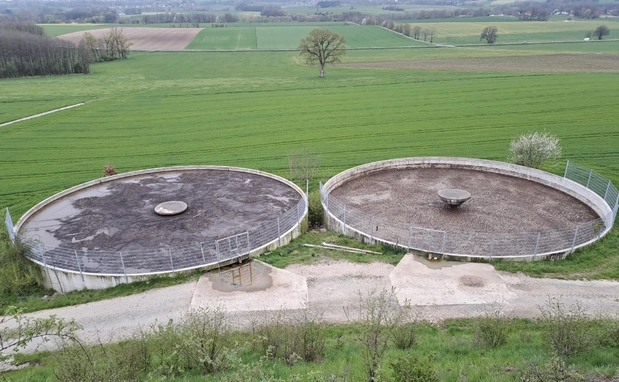
Many cattle and pig farmers had prepared for 1 December 2026: by then, open manure tanks were supposed to emit less under the TA Luft. Now the deadline is to be extended by three years. That takes away the time pressure, but not the question of which solution suits your own farm.
Here you will find what applies as things stand today, which measures are named and where BioAktiv Professional Liquid Manure comes in during everyday liquid manure management.
What is changing with the deadlines
The TA Luft (Technical Instructions on Air Quality Control) is the administrative regulation under which authorities review and approve installations with air emissions, including livestock facilities and manure storage. The 2021 version sets new requirements for manure tanks.
The TA Luft 2021 requires an emission reduction of at least 85% for existing and 90% for new manure tanks. The previous deadlines provided, depending on barn size, for retrofitting manure tank covers, exhaust air cleaning systems or other measures by 1 December 2026 or 1 January 2029 respectively.
With the extension to the end of 2029, the federal government wants to avoid duplicate work. New requirements for livestock farming are expected from 2030 under the revised EU Industrial Emissions Directive. Farms should not first have to retrofit nationally and shortly afterwards again. Individual states such as Bavaria, North Rhine-Westphalia and Thuringia have already issued their own rules.
Who is affected and what to do now
Affected are cattle and pig farms with open storage tanks for liquid manure or digestate. Those who do not yet have a fixed cover must retrofit or rebuild by the applicable deadline. Whether and how alternatives are recognised is decided by the federal states.
- Record your tanksNote whether open or covered, size and year of construction.
- Ask the authorityClarify which measure and which deadline apply in your federal state.
- Choose a measureWeigh cost, effort and suitability for the tank, and prepare evidence, for example photos and records.
- Review liquid manure managementKeep an eye on stirring times, withdrawal and sediment layers.
Which measures are available
The TA Luft names fixed covers, tent roofs, suitable floating bodies or floating film as examples. For cattle slurry, Saxony and Schleswig-Holstein also recognise a natural floating crust.
| Measure | What is known | Note for farms |
|---|---|---|
| Fixed cover, tent roof | Named as an example in the TA Luft | High investment; in Saxony alone around 1,000 tanks are affected, an estimated €75 to 100 million |
| Floating bodies, floating film | Named as an example in the TA Luft | Check suitability for your own tank |
| Natural floating crust (cattle slurry) | At least 10 cm, dry; recognised in Saxony and Schleswig-Holstein | Do not destroy, stir completely at most twice a year, sub-surface filling; in Saxony, document monthly |
The information on floating crusts refers to cattle slurry and cattle digestate. We are not aware of any corresponding rules for pig slurry.
BioAktiv Professional Liquid Manure on the farm
BioAktiv Professional Liquid Manure is intended for manure tanks, solid manure storage and barns, for cattle and pigs. It supports liquid manure management in everyday operation. More on the topic: Treating liquid manure.
Liquid Manure
Supports the rotting of liquid manure by stimulating aerobic bacteria, reduces pungent ammonia smell and odour load, and dissolves sediment layers.
Homogeneous liquid manure, less odour
More fluid, homogeneous liquid manure, fewer sediment layers and less odour in the barn and in storage. More in the pig trials.
Homogeneous liquid manure, less stirring
More homogeneous liquid manure and less need for stirring. Where the natural floating crust is recognised as a reduction measure, it must not be destroyed. Before use, clarify with the authority and your adviser how BioAktiv Professional Liquid Manure can be used there. More in the cattle trials.
Results from trials
| Farm, year | Result | Framework |
|---|---|---|
| Pig fattening, Schwasdorf (DE), 2003–2004 | Layer thickness from approx. 50 cm to 10–15 cm (−70%) | Several manure tanks, result after one year, before-and-after documentation |
| Dairy cattle, Agrargenossenschaft Wildenborn (DE), 2023 | Anaerobic bacteria from 750,000 to 2,950,000 CFU/g (+293%) | Five sampling dates July to December 2023, laboratory analysis BioCheck Leipzig |
| Pig manure lagoons, North Carolina (USA), 2017 | Aerobic activity up to +97% (control +10%) | 21 finishing lagoons, 11 months, samples top, middle, bottom |
The results come from individual trials under different conditions and cannot simply be transferred to every farm. You will find all results under Manure and compost trials.
To BioAktiv Professional Liquid ManureWhich solution suits your manure storage?
BioAktiv supports cattle and pig farmers with liquid manure management and helps to assess the right solution for their own farm.
Request a consultationQuestions about manure storage and TA Luft
From when does the obligation apply?+
Until now, 1 December 2026 applied. On 7 October 2026, the federal government decided on an extension to the end of 2029; the Bundesrat still has to approve. Some states (Bavaria, North Rhine-Westphalia, Thuringia) already have their own rules. Ask the competent authority about the current deadline.
Is a natural floating crust enough?+
For cattle slurry, Saxony and Schleswig-Holstein recognise it under conditions: at least 10 cm, dry, not destroyed. Whether more states will follow is open. We are not aware of any corresponding rules for pig slurry.
Does BioAktiv Professional Liquid Manure replace a cover?+
No. It supports liquid manure management but does not replace any measure required by the authority.
Which animals is the product intended for?+
For farms with cattle and pigs.
How do I order?+
Directly in the online shop or via personal consultation.